
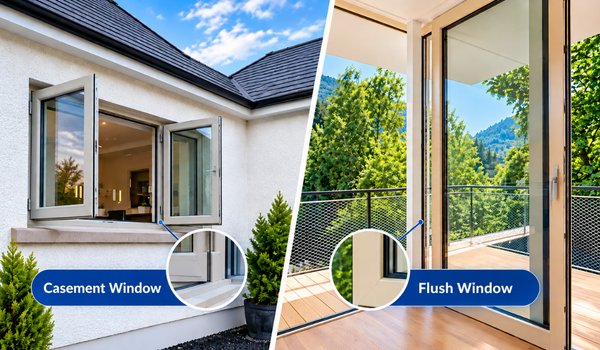
If you are replacing windows in a Dublin home and have been browsing options online, you have likely come across both flush and casement windows. They can look similar at a glance – both open outward, both come in uPVC, and both offer good thermal performance. But they are not the same thing, and choosing the wrong one for your property can affect everything from how your home looks on the street to whether you qualify for an SEAI grant.
This guide breaks down exactly what makes each window type different, who each one suits, and what to look for when making a decision.
What Is a Casement Window?
A casement window is the most common type of window fitted in Irish homes today. It has one or more sashes – the part of the window that opens – hinged at the side. The sash swings outward when you turn a crank handle, and it presses firmly against the frame when closed.
Key features of casement windows:
- Side-hinged sash that opens fully outward
- Multi-point shoot bolt locking mechanism for security
- Hinge claws as standard on every unit
- Multi-chambered profile for thermal efficiency – ThermoGlaze uses the Elite 70 Sculptured and Elite Chamfered frame profiles
- Four glazing options available, covering different levels of acoustic and temperature insulation
- Opens fully to allow maximum airflow into the room
Casement windows work well in kitchens, living rooms, bedrooms, and bathrooms. They are practical and low-maintenance, and the outward-opening design means the frame itself stays inside, out of the weather.
What Is a Flush Window?
A flush sash window looks different from a standard casement at first glance. The sash sits level with the outer frame rather than sitting proud of it. The result is a flat, clean external face – no protruding sash edges, no visible rebate, just a smooth surface.
This design was originally associated with period and Georgian properties. The flush sash was the style used on older Irish homes where timber windows were standard. Today, it is replicated in high-performance uPVC using a full timber weld jointed construction that gives the same clean look without the maintenance.
Key features of flush windows:
- Sash sits flush with the outer frame – no raised edges on the outside
- Double rebated frame – two seals instead of one, giving added weather resistance
- 80mm thick profile for improved thermal performance
- Double glazed option with a U-value of 1.6 (A rating)
- Triple glazed option with a U-value of 1.0 (A rating)
- Available in multiple colours inside and outside
- Wide range of internal hardware to suit period or contemporary interiors
- Glazed like a standard casement – no bonding required during installation
The flush window was designed as a direct replacement for timber windows on older and heritage-style properties, but it works on new builds too, particularly where a minimal, contemporary look is wanted.
Flush vs Casement Windows: Side-by-Side Comparison
| Feature | Casement Window | Flush Sash Window |
| Sash position | Sits proud of the frame | Sits level with the frame |
| External appearance | Traditional raised sash look | Flat, smooth external face |
| Frame depth | Standard (varies by profile) | 80mm thick double rebate |
| Number of seals | Single seal | Double rebate – two seals |
| Double glazed U-value | Varies by spec | 1.6 (A rating) |
| Triple glazed U-value | Varies by spec | 1.0 (A rating) |
| Best suited to | Modern builds, extensions | Period homes, heritage areas |
| Maintenance | Low | Low |
| Security | Multi-point locking, hinge claws | High security as standard |
| Colour options | Yes | Yes, inside and outside |
What Are the Main Differences?
1. How Do They Look From the Street?
This is often the deciding factor for Dublin homeowners, particularly those in areas like Rathgar, Drumcondra, or Clontarf where period architecture is common.
A standard casement window has a visible sash that sits slightly outside the frame. On older Irish homes, this can look out of place where the original timber windows would have been flush with the brickwork.
A flush window resolves this completely. Because the sash sits level with the frame, the window looks like it belongs on a Victorian or Edwardian terraced house. It is the reason many Dublin homeowners fitting out period properties choose flush over standard casement.
2. How Do They Perform Thermally?
Both window types can deliver strong energy performance, but the flush sash has a specific advantage in its standard specification.

The 80mm double rebate frame on the flush window creates a thicker profile with two contact seals. This reduces heat loss more effectively than a thinner single-seal frame. The triple glazed flush option achieves a U-value of 1.0 – which is the threshold you need to meet to qualify for an SEAI home energy grant. The double glazed flush option comes in at 1.6, which does not meet the SEAI threshold.
If SEAI grant eligibility is a factor in your decision, the triple glazed flush window is the one to go for. You can check full grant details on the SEAI grant page.
3. Installation and Disruption
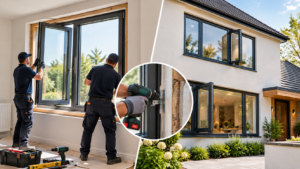
One practical point worth knowing: the flush sash window installs like a regular casement window. There is no bonding involved, so the installation process is no more disruptive than a standard window replacement.
4. Security
Both window types come with strong security as standard at ThermoGlaze. Casement windows include hinge claws and a multi-point shoot bolt locking mechanism. Flush windows are also specified with high security as standard. Neither type requires an upgrade to meet the security standards expected in a modern Irish home.
Which One Should You Choose?
The answer depends on your property and what you want to achieve.
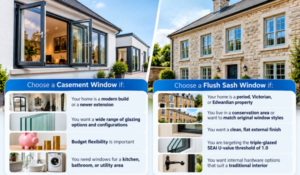
Choose a casement window if:
- Your home is a modern build or a newer extension
- You want a wide range of glazing options and configurations
- Budget flexibility is important
- You need windows for a kitchen, bathroom, or utility area
Choose a flush sash window if:
- Your home is a period, Victorian, or Edwardian property
- You live in a conservation area or want to match original window styles
- You want a clean, flat external finish
- You are targeting the triple-glazed SEAI U-value threshold of 1.0
- You want internal hardware options that suit a traditional interior
If you are unsure, the best thing to do is come and see both in person at one of the ThermoGlaze showrooms. The difference between the two is much easier to understand when you are standing in front of them.
See Both Windows at Our Dublin Showrooms
ThermoGlaze has two showrooms in Dublin where both flush and casement windows are on display. You can speak directly with the team, see the hardware options up close, and get a quote on the spot.
Northside Showroom – Swords:
Unit F2, Swords Enterprise Park, Feltrim Road, Drinan, Swords, Co. Dublin, K67 WF72
Southside Showroom – Rathgar:
68 Rathgar Avenue, Dublin 6, D06 KN53
Conclusion
Casement and flush windows are both high-quality, low-maintenance options for Irish homes – but they serve different needs. A casement window is the go-to choice for modern homes, extensions, and anyone who wants proven, reliable performance across a wide range of glazing specs. A flush sash window is the right call for period properties, conservation-sensitive areas, and homeowners who want the thermal performance needed to qualify for an SEAI grant with triple glazing.
If you are still weighing up which is right for your home, get in touch with the ThermoGlaze team. A quick conversation – or a visit to either showroom – will usually make the decision straightforward.
Call us on 01 912 0600 or visit thermoglaze.ie to book a consultation or request a free quote.
FAQs
1. What is the main difference between a flush window and a casement window?
The main difference is how the sash sits within the frame. On a casement window, the sash protrudes slightly outside the frame. On a flush window, the sash sits level with the outer face of the frame, giving a flat, smooth finish.
2. Are flush windows more expensive than casement windows?
Flush windows are generally priced at a premium over standard casement windows because of the more complex frame construction – the 80mm double rebate profile and the two-seal system add to the manufacturing cost. Contact ThermoGlaze directly for accurate pricing on your specific project.
3. Can flush windows be used on modern homes?
Yes. While flush sash windows are most associated with period properties, they work on contemporary builds too, particularly where a minimal or clean-line aesthetic is wanted.
4. Do flush windows qualify for the SEAI grant?
The triple glazed flush sash window, with a U-value of 1.0, meets the SEAI threshold for window energy grants. The double glazed option, with a U-value of 1.6, does not meet the required threshold. Always confirm current SEAI eligibility criteria before purchasing.
5. Are casement windows secure?
Yes. ThermoGlaze casement windows come with hinge claws and a multi-point shoot bolt locking mechanism as standard. This is the security specification used across the full casement window range.
6. What U-value do I need for the SEAI windows grant?
To qualify for the SEAI home energy grant, your replacement windows need to meet a specific U-value threshold. The triple glazed flush sash window at U-value 1.0 satisfies this requirement. Check the current SEAI criteria before ordering, as thresholds can be updated.
7. Can I get flush windows in different colours?
Yes. ThermoGlaze flush sash windows are available in multiple colours for both the inside and outside face. There is also a range of internal hardware options, including period-style fittings for older properties.
8. How long does it take to install flush or casement windows?
The installation process for both window types is similar – the flush sash installs like a standard casement window, so there is no additional disruption or extended fitting time. The exact duration depends on the number of windows and site conditions.
9. Where can I see flush and casement windows on display in Dublin?
Both are available to view at ThermoGlaze’s two Dublin showrooms – in Swords (northside) and on Rathgar Avenue (southside). No appointment is necessary, but calling ahead is recommended.
10. Do I need planning permission to replace windows with flush sash windows in Dublin?
In most cases, replacing windows on a like-for-like basis does not require planning permission. However, if your property is in a conservation area or is a protected structure, you may need to check with Dublin City Council or your local authority before proceeding. ThermoGlaze can advise on common requirements for Dublin properties.