
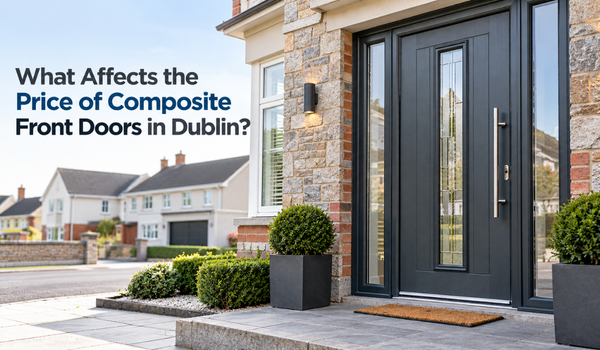
The cost of a composite front door in Dublin will depend on a number of factors such as the range of door, size, style of glazing, color, security hardware, frame material and the complexity of the installation. There’s no single figure that will apply to every home, so quotes can vary wildly from one property to the next.
Dublin homeowners replacing an old timber or uPVC front door will generally find that composite doors offer better thermal performance, stronger security, and lower long-term maintenance – but the right door for your home depends on your opening size, property style, and what features matter most to you.
This guide from ThermoGlaze breaks down every factor that affects composite front door prices in Dublin – so you can compare quotes and choose with confidence.
1. The Type of Composite Door You Choose
Not all composite doors are built to the same specification. There are different ranges available, and the range you choose has a direct impact on price.
At ThermoGlaze, the two main composite door ranges available are:
- Apeer Doors – A premium Irish-manufactured composite door known for exceptional thermal performance and a wide range of finishes. Apeer doors are among the most thermally efficient composite doors available in Ireland.
- Palladio Doors – A high-quality composite door with a timber-like aesthetic and strong structural performance. Palladio doors are popular in both traditional and contemporary homes.
Higher-specification ranges include thicker door slabs, better insulation cores, and more advanced hardware – all of which affect price.
2. Door Size and Configuration
Standard door sizes are generally the most economical option. Where your opening falls outside standard dimensions, the door needs to be made to measure, which adds to the cost.
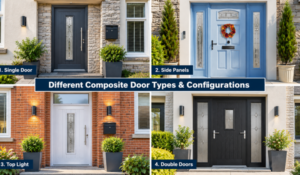
Configuration also matters:
- Single door – The most common and cost-effective option
- Door with side panels – Adds glazing on one or both sides of the door frame, increasing material cost
- Door with top light – A glazed panel above the door, often seen on period Dublin homes
- Double door – Two composite door panels within one frame; the least common for front doors but available
If your Dublin home has a wide or unusually proportioned entrance – common in older Victorian or Edwardian terraces in areas like Rathgar, Clontarf, or Drumcondra – a bespoke size is likely needed.
3. Glazing Options
Glass adds both character and cost to a composite front door. The type, size, and decorative finish of the glass all influence the final price.
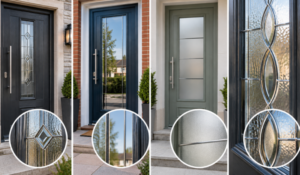
Common glazing choices and how they affect the price:
- No glazing (solid door) – Generally the most straightforward option
- Standard double-glazed unit – A moderate addition to the overall price
- Decorative or leaded glass – Higher cost due to the craftsmanship involved
- Privacy or frosted glass – A mid-range addition; popular for busy street frontages
- Triple-glazed glass unit – A higher thermal rating that adds to cost but improves insulation
- Full-length glazing panels – The most significant glazing addition in terms of price
Bear in mind that glazing also affects your door’s U-value – the measure of how much heat it loses. A better-insulated glazing unit will add to the upfront cost but reduce your heating bills over time.
4. Colour and Finish
One of the biggest selling points of composite doors is the range of colours and finishes available.
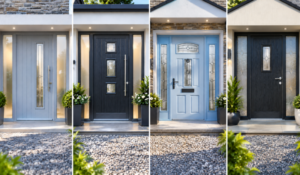
Unlike timber, which is limited to paint or stain, composite doors come factory-finished in a wide palette.
- Standard colours (e.g. white, black, grey) typically carry no premium
- Dual-colour options – where the outside and inside are different colours – may cost more
- Woodgrain foil finishes add a realistic timber look and are priced above solid colours on some ranges
- Bespoke or RAL-matched colours on certain ranges can carry a premium
If you want to see colours in person before deciding, both ThermoGlaze showrooms carry door samples across the Apeer and Palladio ranges.
5. Security Hardware and Locking Systems
Your front door is a key point of entry, and the hardware that secures it matters both for safety and for price.
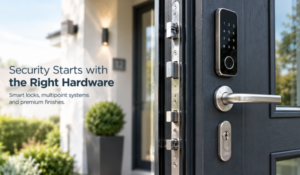
Standard composite doors come fitted with a multipoint locking system as standard – this alone puts them well ahead of older single-point locks on timber doors. However, you can upgrade:
- Smart locks or keypad entry – Convenient but adds to the overall cost
- Anti-snap, anti-drill, anti-pick cylinders – Worth considering for insurance purposes; mid-range addition
- Shootbolts and additional locking points – Increases the number of locking points around the door frame
- Door handle and furniture grade – Basic lever handles vs. premium stainless or brass furniture
If security is a priority – and for most Dublin homeowners it is – investing in high-quality locking hardware is worth every cent.
6. Frame Material and Profile
The frame around your composite door matters as much as the door slab itself.
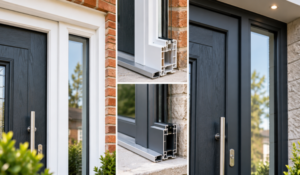
Most composite doors are fitted in a uPVC frame as standard, but aluminium frames are also available and carry a higher price point.
- uPVC frames are durable, low-maintenance, and cost-effective
- Aluminium frames offer slimmer sightlines and a more contemporary look at a premium
- Some installations require a structural or brick opening to be widened or reshaped – this is a building work cost separate from the door itself
Always ask your supplier whether the quoted price includes the full frame and all trims, or the door slab only.
7. Installation Complexity
Labour is a significant part of any composite door price in Dublin. Straightforward like-for-like replacements – same size, same position, no structural changes – are the most cost-efficient to install.
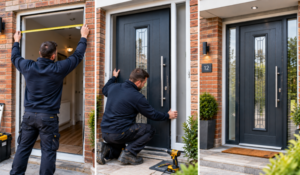
Factors that can increase installation time and cost include:
- Removing and disposing of an old door with a non-standard frame
- Working on period or protected structures where care is needed around original masonry
- Homes in upper floors or with restricted access
- Any rendering, plastering, or brick repairs needed around the new frame
A professional installation from a trusted supplier ensures your door is fitted squarely, sealed correctly, and performing to its rated specification from day one.
8. Add-Ons and Accessories
A few extras are worth budgeting for:
- Letter plate position – Integrated vs. surface-mounted options
- Door viewer / spyhole – Minor cost but useful
- Door knocker – Decorative, range of price points
- Threshold bar and weatherbar – Usually included, but worth confirming
- Door canopy or porch – Separate purchase but often quoted together
Is a Composite Front Door Worth the Investment?
For most Dublin homeowners, yes. Here is why:
- Durability – Composite doors do not warp, crack, or swell the way timber doors can in Ireland’s wet climate
- Thermal performance – A well-insulated composite door contributes to your home’s BER rating and reduces heat loss
- Low maintenance – No sanding, varnishing, or repainting needed; wipe-clean finishes last for years
- Security – Multipoint locking as standard, far stronger than older timber or basic uPVC doors
- Kerb appeal – A new composite front door is one of the most noticeable upgrades you can make to a home’s exterior
If you are thinking about a broader home improvement project – new windows alongside your door, for example – it is worth checking whether you qualify for the SEAI grant, which can cover a portion of the cost of energy-efficient upgrades.
Visit Our Showrooms in Dublin
The best way to get a true feel for composite doors is to see them in person. ThermoGlaze has two showrooms in Dublin where you can view full-size door displays across the Apeer and Palladio ranges, compare colours, glazing styles, and hardware options, and speak with our team.
Swords Showroom (Northside)
Unit F2, Swords Enterprise Park, Feltrim Road, Drinan, Swords, Co. Dublin, K67 WF72
View Swords Showroom
Rathgar Showroom (Southside)
68 Rathgar Avenue, Rathgar, Dublin 6, D06 KN53
View Rathgar Showroom
Both showrooms are open to the public – no appointment needed.
Get a Free Quote for Your Composite Front Door
Ready to take the next step? The ThermoGlaze team is happy to visit your home, measure up, and provide a no-obligation quote tailored to your door opening, property style, and budget.
📞 Call us: 01 912 0600
🌐 Visit: www.thermoglaze.ie
📋 Or use our online form: Request a Free Quote
Conclusion
The price of a composite front door in Dublin depends on several things working together – the range you choose, the size of your opening, the glazing style, colour, hardware, and how complex the installation is. There is no single number that fits every home.
What matters most is getting a clear, itemised quote that covers the door, the frame, the hardware, and the installation – and choosing a supplier with the track record to deliver on what they promise.
ThermoGlaze has been fitting doors for Dublin homeowners for years, with a showroom on both the northside and southside of the city. Whether you are replacing a tired timber hall door or upgrading a worn uPVC entrance, our team can walk you through every option and help you make a decision that suits your home and your budget.
Call 01 912 0600 or contact us to book your free consultation today.
FAQs
1. What is a composite front door made from?
A composite front door is made from a combination of materials – typically a uPVC or timber frame, a high-density foam insulation core, a Glass Reinforced Plastic (GRP) outer skin, and internal reinforcement. This combination gives composite doors their strength, thermal performance, and low-maintenance finish.
2. Are composite doors better than uPVC doors?
Composite doors are generally considered more durable and better insulated than standard uPVC doors. The solid foam core and GRP skin make them more resistant to impact and the elements. That said, uPVC doors remain a reliable and cost-effective option – the right choice depends on your priorities and budget.
3. How long does a composite front door last?
A quality composite door, correctly installed and maintained, should last 25–35 years. The GRP skin does not fade, warp, or peel, and the multipoint locking system is designed for long-term use.
4. Can I get a composite door in a custom colour?
Yes. Both the Apeer and Palladio ranges available through ThermoGlaze offer a wide palette of colours, including dual-colour options where the interior and exterior finish differ. Some ranges also allow bespoke RAL colour matching.
5. Do composite doors need planning permission in Dublin?
In most cases, replacing a front door with a like-for-like composite door does not require planning permission. However, if your home is in a protected structure or a conservation area, you may need to check with Dublin City Council or your local authority before proceeding.
6. Does a new composite door improve my BER rating?
Replacing an old, poorly insulated door with a modern composite door can contribute to an improved BER (Building Energy Rating) assessment, though the impact is generally smaller than replacing windows. If energy efficiency is your main goal, upgrading both windows and doors together gives the best result.
7. What is the difference between Apeer and Palladio composite doors?
Both are premium composite door ranges sold through ThermoGlaze. Apeer doors are manufactured in Ireland and are particularly noted for high thermal efficiency. Palladio doors have a strong timber-grain aesthetic and are popular with homeowners who want the look of a painted timber door without the upkeep. Your ThermoGlaze consultant can walk you through both options.
8. Can I design my composite door online?
Yes. ThermoGlaze offers door design tools for both ranges. You can use the Apeer Door Builder or the Palladio Door Designer to explore styles, colours, glazing, and hardware before you contact us for a quote.
9. Does ThermoGlaze cover all areas of Dublin?
Yes. ThermoGlaze fits composite doors across all of Dublin – northside, southside, city centre, and surrounding suburbs. If you are unsure whether your area is covered, call 01 912 0600 and the team will confirm.
10. How do I get a quote for a composite front door in Dublin?
The simplest way is to call 01 912 0600, fill in the quote request form at thermoglaze.ie, or visit one of the ThermoGlaze showrooms in Swords or Rathgar. A member of the team will arrange a home visit, measure your opening, and provide a full written quote at no charge.